Showing posts with label Musings. Show all posts

Thursday, February 9, 2023

Meme Theory

I am, at best, an Instagram psychologist. Sure, I've read a couple books. I've been to some therapy. I can synthesize some of my life experiences into something like lessons for myself. Yet I'm a person perpetually dumbfounded by my own existence, and I haven’t made much "sense" out of it. 

It's the realization of lostness and smallness coupled with the insatiable and even destructive urge to attempt expression that makes artists and writers into artists and writers, almost beyond our own will. Little thrills and validates me like mudlarking my own head to "forge delicate air into words, giving them wings as angels of persuasion and command," as Emerson put it. Before persuasion or command, though, is connection. Expression opens the door to connection, and connection is life force. 

Connecting over celebration and rejoicing tastes sweet! But total fumbling greed is what I feel for connection over things dark, sad, and difficult to know. Forging that delicate air into words is what magnetizes me to art. To write - to share - is to fight against cosmic loneliness. 

The zeitgeist of 2022 and 2023 in the United States is complex and I am a fool whose errand it is to attempt an explanation. Memes are the startling language of our lightspeed era. I can't always decipher meme genres. Am I seeing the bestsellers or the indie releases or the dark web chatter? I bet a brilliant linguist is writing a book about this now, including the hierarchy of meme sources and its meaning; depending on your age, you are most likely to gravitate toward specific social media platforms or websites, which determines how far removed you are from meme incubators. That's why your older friends send you memes you saw three weeks ago and your kids use terms you've never heard. 

I feel goofy describing meme incubation with such seriousness, but the life of a language is the pulse of culture. The word "meme" was coined by evolutionary biologist Richard Dawkins, conceptualized around 1976. The term is a hybrid of the Greek mimema, meaning "that which is imitated," and the English "gene." Memes as we know them today didn't exist in 1976, but the concept of a thought virus - the social imitation of a resonate idea - is an essential component of what makes us feel digitally connected. 

The internet, memes, and language move faster than humans develop. That's why we eventually stop socializing on newer platforms. Xanga, Myspace, Tumblr, and DeviantArt were my teenage haunts, then I found a groove on Facebook, but settled on Instagram. Twitter, Youtube, and Reddit are of the same era (perhaps a fraction later), but their visual layouts were poor, overwhelming, or both. Snapchat was the first platform I rejected based on the sense that my ability to assimilate had expired, and I refused to learn TikTok even when my employer asked me to. 

Let's liken those eleven platforms to international dialects that were born within the past fifteen years. The seismic shift in language and culture is impressive enough, but consider that our children will speak ten other dialects! Does the internet (and language) change us or do we shape the internet (and language)? Both. Neither. Sometimes one, sometimes the other. I don't resist that major swaths of our lives are irrevocably digital. Instead, I want to equip my children to know and practice art and relationships within the framework of our global digital language. 

What, then, am I to make of the microcosm of memes that are my present language? In simple English, I'd describe them as shockingly funny and depressing at the same time. I'll call it oxymoronic mystic nihilism, and there's no marked exit. 

***

Rewind to 2020. I experienced pockets of super-human functionality during the COVID-19 pandemic crisis. Don't impale me for using the past tense, the general feel seems to be that the health crisis component is alleviated. Yet it's clear that it's left permanent marks beyond our lung tissue. 

Throughout 2020 and 2021, I was on constant high alert about the minutia of daily-changing health advice and the reality that "the truth" of how to best handle COVID was often undecipherable or plain unknowable. I don't know if there was one single day for 1.5 years that I didn't have some discussion about health protocols. I remember likening it to a Jenga tower, wherein each adjustment touched every other aspect of my physic structure. 

Meanwhile, I saw the landslide in my children's mental health as they were ripped out of their entire outside lives and then suffered through whatever was happening with Zoom school (along with their teachers, Lord have mercy!). Then there was the engulfing drama of grocery shopping and masking politics. Three years on, grocery shopping remains a source of anxiety for me, though I used to look forward to it. The list goes on. There were people dying everywhere, every day. That was true before COVID, and remains true, but our awareness of our vulnerability and our potential to imperil others was sustained and acute. 

You were there too. I know you must have your own painful, perhaps as-yet-untold stories of the chaos and horror visited on the whole world, sometimes of our own making. I begin to get an idea of how archetypes like The Angel of Death come to be. We felt our faces pressed against the glass of our powerlessness in the scheme of everything, and we closed our eyes, or cried. 

I'm good at survival. I'm very tough when I need to be, and my brain and body have needed to be a lot more than I anticipated, even while the material aspects of my life are better now than they were ten years ago. Humans tend to respond to stressors with fight, flight, or freeze reactions as self-preservation strategies. These reactions to real or perceived threats cause a surge of adrenaline in the human body, and we need to recoup that energy expenditure through rest. The need to recoup rest coupled with the lack of opportunity to do so explains a lot of the 2022-3 meme flavor. 

When we don't know how to rest - and our society works against us here - we may continue to respond with "freeze," which we subliminally hope makes us invisible to danger, like our friends the possums. Did you know the common possum lives only two years? The freeze response really takes a toll. 

The signs of collective PTSD are visible. I saw that unprofessionally, of course, but something is happening. I was born with RBF, but not anxiety, depression, or ADHD, that I'm aware of. Are we getting better at diagnosing, or is this a silent second pandemic? To be clear, many of us were struggling a-plenty prior to COVID, but I think it's unspoken yet uncontested that we've entered a new phase of psychosomatic wasteland that follows survival (sometimes beautifully!) of an apocalypse. I know you know this teetering feeling I'm getting at. It often feels like we're on the brink of not making it. 

Again, my analysis is anecdotal, but I think we're seeing a surge in the divorce rate. Did the pandemic cause divorce or separations? Of course not. But prolonged stress, loss of income and housing, illness, upheaval of all kinds, and inability to soothe oneself so as not to exacerbate interpersonal conflicts? Definitely. Crises can be a time of clarity, and I hope each of us is on the frontlines of supporting our friends and family who make a break from destructive dynamics. I also celebrate the bonds that held, in spite of everything. It's a little bit miraculous, mysterious, maybe even ludicrous. 

During months of lockdown and then forming pods, I became much closer with my closest friends. Then I moved far, far away, priced out of my hometown as the job and housing markets fell ill with capitalism. There were other factors too, I'm sure, but by mid-2022, I lost the ability and most of my will to socialize. That sounds so extreme, but I know from memes and from short chats with friends that the experience is rampant. Because the language of the internet has some consistency, it's been a genuine aid in maintaining a sense of self and adjusting myself. It's our place to feel lost, together. A constant distraction as well as a ceaseless call-in. To frame social media as a mere highlights reel ignores that it gives us words, often memed, to grieve, be scared, and begin to recover. 

Face to face (if you can coax me from my home-cave), I'm no longer who I was in 2020, but neither is anyone else. I'm braver and more scared. I'm mortally wounded and hopefully wiser. I'm bent and twisted like a lawn chair wrapped around a palm tree after a hurricane. Wrung out after disaster. The world as I knew it is gone and it's never coming back. Grieving takes longer than the time given us, and change doesn't wait for grief to subside. 

I've never been in a hurricane, but I can imagine that if you've lived through the full force of a massive storm, even a breeze can be triggering. That's how 2022 socializing felt. It felt unsure and unsafe. I was unsure of myself when I used to be confident. I was rattled to hear myself talking "too much" with people I didn't know. I talked about death rituals in different cultures at a kid's birthday party, and then I went home and worried that my social skills were Neolithic. Every proverbial breeze pushed me to panic, zero to sixty. 

One of my sisters is severely allergic to cats, and I have a cat (long story). Intense allergies can be a life threatening chronic illness. My sister has medication that protects her from death, but coming out of the hyper-vigilance-of-health we learned in coping with COVID into a severe allergy situation punches all my neuroticisms right in the suprasternal notch. I can't not be woefully anal about it because it feels like a continuation of small mundane choices about my clothes or my handwashing habits meaning life or death for my loved ones. Both my sisters are Zen saints for remaining kind and sane while living with chronic illness.

I used to do whatever the living version of rolling over in my grave is when I'd hear about someone dying from ingesting a trace amount of peanut on a candy wrapper. Death by a microscopic amount of allergen is tragi-comic and misérables, like every death. Even for those of us to cling to the hope of a transcendent afterlife. Death may not be the end, but it is an end.  

I thought I'd breath easier, no pun intended, with the initial learning curve of COVID behind me. Instead, I was disoriented beyond recalibration. Many standards - the things by which we measure "normal" - were destroyed. Things that felt firm were washed away. I was adrift. 

Monsoon, by Raghubir Singh

***

One of my writing heroes is Jean Stafford, who won the Pulitzer prize for fiction in 1970. It's an award almost always granted during an artist's lifetime and Stafford was very much alive when she won this prestigious honor for her work. Yet I happen to know from reading some biographical material about her that she was plagued for most of her life by the feeling that she wasn't a good writer and no one liked her. 

Pearl S. Buck is another woman in my writer's pantheon and her autobiography harbors an array of tragedies. Buck won the Pulitzer prize for fiction with her very first novel, The Good Earth, in 1932. She recounted that another writer advised her not to mind the jealous hatred of her colleagues who thought her undeserving of the Pulitzer for her debut work (they were all men, do with that tidbit what you will). How could she be so good as a virtual novice? She may have been a novice to the literary world, but she was no novice at life by that time. 

I have a sizable collection of illustrated children's books and enjoy learning about the lives of my favorite artists. Many beloved illustrators were deeply strange people, isolated or even ostracized in their childhoods. It is common, especially among those who also wrote the books they were illustrating, that these artists didn't begin their best work until they'd retired from their "regular" careers. 

Writing in a way that touches people to the core - even if the writing is very simple - is a skill that demands a lot of life be lived. And with much life, there is often much suffering. Not everyone maneuvers the canals of suffering with the same rudder, but when I pay attention, the artists I admire most are talking about the suffering - and the triumphs - of their lives in a way the rest of us understand, even if we don't realize the quiet nod to humanity that we're absorbing. 

Part of my own navigation of suffering in the past several years has been breaking open my beliefs about what happens before and after life as we know it. We are unconscious of our own existence apart from the years between our birth and death, but have you noticed how some children share the wisdom of elderly artists? I think that some children have spirits that preexist their bodies, in the same way some older adults allow their spirits to recall infancy. Ouroboros. Jesus often urged adults to embrace their inner child, incidentally a popular practice in modern psychology.

Her consuming pain and self-doubt prevented Jean Stafford from believing in what others recognized in her as genius. Genius is, I think, a practice of making our experiences more than the sum of their parts. I'm not a masochist, but I'm not sure you can have genius without wounds. Genius is not celebrity. 

What most struck me about the movie "Everything Everywhere All at Once" was how it embodied the 2022 feeling of lost-in-chaos. It captured how we attempt to reach toward one another across the universes of our heads, our families, our private life, and public life, and sometimes fail spectacularly. Even succeeding hurts so much. It was an artful and complex moving meme of genius. Appendix A: Bo Burnham's "Inside" and Phoebe Bridger's subsequent cover of "That Funny Feeling." 

***

As I've been drafting these thoughts, 7.8 and 7.5 earthquakes decimated southern Turkey and northern Syria. I know that people die untimely deaths all over the world, every day. For whatever reasons, some hurt worse than others. I find myself open to the grief swirling across my screen on these days more than I have been for a while. 

The internet encourages empathy in some of us, despite what talking heads warn. But growing up on the internet means we're connected to all, at all times. We're experiencing everyone's pain at all times, in ways we didn't have access to even 10 years ago. This access illuminates our powerlessness to take individual action that results in global comfort. But what's also clear, if you want to see it, is that we can take collective action that results in local comfort. 

The exception to lack of global-scale impact and a boone of localized care is art. Words carried on wings of persuasion and command are needed genius in collective grieving. 

Standing on the edge, crying, is an honest response. The Kingdom of God, in which we really love every neighbor, is clashing with the world we've destroyed through not caring about one another. It seems quite natural that this collision, this oxymoronic nihilistic mystic space, renders us shredded mulch for the cosmos. Not as punishment, but as the birthing pains of All Great Loves. 

I like to learn about what I'm experiencing as much as the next person, but all psychology is cultural and of its time. Learning why I'm feeling something or the name of whatever thing my brain is doing is interesting, but it doesn't sooth the experience. Everything is not okay just because I learned to label it. Mysticism saying that everything is at once knowable and unknowable is horse shit when you're in the thicket of suffering. If Richard Rohr never freaks out or if Jesus never sweat blood, I might write them off.

The religion of my youth taught that feelings were trickery. If ever I felt them in full, shame bit at my heels because I was enthroning my own experience instead of casting my woes on a Bigger Than Feelings God. Never mind that a person without feeling is a godless husk. If you operate on the belief that your emotions are invalid because everything everywhere all at once is, in fact, bigger than you, you have indeed been tricked. Feelings can change, but that doesn't mean they don't "count" at the time they are felt. 

On New Year's day in 2022, an organization I'm deeply invested in began a fraught and painful transition away from the leadership of the founding couple, who turned out to be charlatans. I felt humiliated that I was duped, as if my feelings led me astray and led me to trust, when cynicism would have saved me a great deal of heartache. Instead, I felt, and I felt it all. The sentence that brought it all into searing focus for me was, when on their way out, one of the founders said, "this organization isn't about the feelings of the workers." So I spent 2022 helping shape the shreds of our collective into something that honors the feelings of the workers, so that we can work together with Christ to bring a healing Kingdom to earth (Romans 8:29). 

Many of us are struggling psychologically more now than we were when the news was ablaze with COVID. We are flailing. It somehow feels lonelier and more exhausting than being shut inside for two years. At least then, I could separate the known and controlled inside from the unknown uncontrollable outside. We're allowed out now, but we've forgotten how to go, and we're scared. I'm nostalgic for the days in which everyone was unmoored at once and no one denied it. Now we are more like ghosts of our former selves, haunting the internet with our lust for comfort. 

Listen: our fears, our worries, our sorrows are worthy of being felt, and worthy of our respect. 

I've got you, and I've got memes for you. 

Wednesday, November 30, 2022

7 Ways to Slow Down

"Slowing Down is Medicine," I bragged recently (a phrase borrowed from Dr. Sarah Campbell). It's not fair to call it a brag exactly, because it's something I've been diligent in pursuing and maintaining, and I'm very proud of that progress. It's ironic that I'm attempting to give some pointers on slowing down during the holidays in more-or-less bullet points (there are accompanying slides on my Instagram), because this has taken me years of therapy and some gut wrenching decisions to get "right" for myself. And it might be a life-long process! Slowing down is not just for the holidays, by any means, but it's a time where I've often felt extra stressed, and I'm guessing some of ya'll are feeling that right now too. 

As with any advice, I believe that someone must want change in order to achieve it. There is no such thing as changing your life without, you know, changing your life. By which I mean, to go from chronically stressed to slowing down, you have to rework the foundation of your values and practices. And not every factor of our lives is within our control. Slowing down isn't something you accomplish by reading a blog post or even a book. It's very serious. But I believe it's worth doing. 


Norman Rockewell's 1947 "Tired Sales Girl On Christmas Eve"

1. Setting Expectations

I love many of the traditions and the surprises of the holiday season. But I also developed high anxiety surrounding the holidays. For the past several years I've been deeply affected by losses, traumas, sizable ideology shifts, lifestyle shifts, and a lil something called a global pandemic. Multiple holidays at the end of the year just kept pushing me past my breaking point. Even things that are built into the Christian tradition of Christmas that are meant to help us reflect rather than implode at the end of the year (Advent), felt like more work. 

I'm sorry to say that Advent has become rather commercialized. If things that are meant for good end up making you feel miserable and inadequate, they aren't good for you right now. I give myself permission to skip or pause rituals for as long as I need to. Observing Advent to whatever specific standards we want to or think we should is not worth panic attacks, insomnia, crying in the bathroom, etc. There's also a lot of pressure to give charitably at the end of the year. If it causes you suffering, just don't do it. There are other ways and other times to give. 

It is very hard for us to slow down. It means saying no to a lot of things we love. Good things! Saying no to good things doesn't make intuitive sense to humans. I love fancy little foods, dressing up, exciting the kids with presents, gifting friends the most thoughtful gift, scoring deals, decking the halls in pink vintage decor, my siblings flying out from California, opening stockings, watching White Christmas with my sisters, putting together a book advent every year (a new picture book to open and read each day with my kids), and going to parties. But I do NOT love doing all of it, all the time. 

A note about privilege. Most of my writing in the past several years has revolved around class, power, and wealth. Do I have more or less of those things than others? And based on that answer, what are my responsibilities? The answers can change based on one's perspective or ideology, and also our ideologies and perspectives should change throughout the course of our lives (that's what growth is!). 

Right now, I'm in a part of my life where I have very little paid work. I have mixed emotions about this. I like to work, but I do not like to be exploited. In the United States at this time in history, not a lot of jobs are ethical. You either work yourself to the bone (your body is being exploited) for high pay, you aren't paid a living wage, or you're exploiting others (working very little, raking in cash; a lot of "white collar" jobs are this category, in my opinion). At the same time, most working class jobs are both extremely demanding and offering untenable wages. I recognize the reality of the options, and part of slowing down is making sacrifices in our consumerism habits so that we begin to combat the culture of working ourselves or others to death (I recognize there's SO much more to be discussed on this topic, and that's a long lifestyle change of its own). 

Buying groceries shouldn't be consumerism. Food isn't a luxury, it's a necessity. A lot of necessities are sold to the highest bidder in our economy (read this article if you feel like raising your blood pressure), and that's bad for everyone, and our planet. We're dealing with intense capitalist corruption while also trying to step outside the system wherever we can as a form of resistance. There is no formula for how to do that. 

I contribute less than one grocery bill's worth of income to our household in terms of cash these days. I also do a lot of unpaid labor, by choice, or because I can't afford to pay someone else to do it so that I can work outside the home. I never aspired to be a stay-at-home mom, but that's been my primary vocation for a decade now. I don't need to be reminded that it's "the most important job" or that it's a "real job" - I know that! It's the hardest, most important job, and it's unpaid. 

The [sometimes extensive] community work I do is also unpaid. I do it because I believe in its importance. Even so, not having a restaurant or office job like I have in the past has given me a window to practice slowing down in areas where I have control over my own life pace. For the first time in our lives, my husband is well paid for his hard work and we can meet our financial needs with one income. Having time to practice fewer demands on myself is a privilege, even though it shouldn't be. I acknowledge that, even while I'm fierce and serious that I've made difficult choices (or not had a real choice at all) to gain it. I acknowledge that wonderful and dedicated people are caught in a system that works them to death to be able to afford a pitiful standard of living. Even "bad" people shouldn't be worked or fed like slaves. Part of slowing down is fighting to normalize a healthier pace for others, too. 

2. Your Body Is On Your Side 

I know the signs my body gives when I'm beginning to push myself too far. "Too Far" is maddeningly little compared to what I used to get done. But remember, slowing down is medicine! The alternative is medicine for having overdone it, and that's an even more bitter pill. Especially with the state of health insurance and health care in this country, slowing down is preventative care. 

The signs of acute stress for me are a tightened chest, frantic thoughts, painful tension in my neck, and sometimes mouth sores. Get to know your own body's signs. I insist on getting 8+ hours of sleep every night. I lay down during the day if I start to feel physical signs of exhaustion. If I have the sniffles, I don't try to push through, I get in bed and watch TV and stay hydrated. I still feel dramatic when I do this for a common cold, but it takes me 24 hours or so to recover now, compared to days of feeling awful if I don't slow down at the sniffles stage. Worth it!!! 

Two other slow-health practices I've incorporated are making "accomplishment lists" and reading physical books. I still make to-do lists and calendar reminders for myself, but an accomplishment list helps me to see what I have done rather than what I haven't done. Meal planning, grocery shopping, babysitting, organizing meetings, or even taking care of my fingernails takes time. Writing it down as accomplished helps me see that I am working and contributing, even if I'm not paid. Secondly, screens have eroded my ability to focus on one thing for very long and to practice being present, so reading physical books is one way I combat the urge to reach for my phone. 

3. Setting boundaries isn't mean. 

Boundaries shouldn't be used to manipulate others into always getting our way, but even healthy and compassionate boundaries can feel harsh if it's a new practice. You can work your way up to a fully-stated boundary (more on that in a sec), especially if you're in the process of establishing your adult choices as separate from the sway of matriarchs or patriarchs in your family. You get to decide which houses you do or don't visit on a holiday, especially if you're trying to visit multiple families in one day. You aren't obligated to do certain things in a certain way every single year. 

Part of slowing down for me is saying no to certain gatherings (even some I want to go to) so that I can be in good spirits at the few events I do attend. You may worry that this is the one time of year where everyone can be together or the one time of year you see certain people. If you need to say no to a holiday gathering but want to see someone who you rarely see, prioritize visiting them or inviting them over at another time! Thanksgivings with just friends have been some of the most relaxed and enjoyable that I've had. In light of that, I've started stating my boundaries to my extended family about my capacity to contribute or participate during a holiday, in hopes that family gatherings can have the same relaxed expectations as friend gatherings. 

Something that helped me ease into saying "no" when there are so many expectations and emotions around family gatherings is the ol' alternatives trick. In the beginning, stating my boundaries caused its own stress because I struggled to handle people being upset at me. Instead of saying "I won't be there" (though that's okay, and you don't owe explanations if you've already communicated your boundaries), you can start with, "I can't make x date, but I can _____." Maybe you can drop off food if it's needed. Maybe you can suggest an alternative time to meet up after the holidays (we all know that suggesting "some other time" simply doesn't happen, so offer actual dates and times as alternatives). If you can't or don't want to reschedule, a heartfelt text to say, "I can't be there, but I want you to know I love you and thank you for always inviting me" can go a long way. 

For work boundaries, try offering alternatives like, "I won't be able to get to that today, but it's on my calendar for Monday." You're saying no to [often manufactured] urgency by communicating a timeline that you can sanely deliver in. I love this method because it gives you time to strategize about a solution and do your best work instead of being flustered into overcommitting on the spot. Most things are not as urgent as they're made out to be. If you run a small business, consider what you might be able to do to create an alternative boost during another time of the year so that you don't kill yourself in November and December trying to take part in the merchandising arms race. 

One boundary faux pas that most of us Millennials are guilty of is constant cancelations. Within the relationships you want to build or maintain, please don't be a consistent canceler. Consistently canceling on people isn't a boundary, it's a disrespect of the gift of other people's time. If you don't want to do something, don't commit to it in the first place! 

I'm as relieved to stay home and watch TV in bed with my boys and my cat as my friends are. I struggle against agoraphobia, thanks to stress, anxiety, and the pandemic. I'm not proud or ashamed, I'm just aware and trying to stay healthy. Traveling, especially with kids (through no fault of theirs), is almost unmanageable for me right now. But I care about my friends and family and I truly want to nurture my closest relationships. I'm cautious with my commitments, but I do my utmost to stick to them when they're made. I rarely feel like the anxiety outweighed the benefit of sticking to the limited social engagements I make. 

I utilize the alternatives method around socializing with friends and the mutual urge to cancel. In an effort to slow down, consider compromises if you're able, such as "I can't fly to you, but I would love to pay for/split your flight fare if you can visit me." Or "I can't drive to your city, but would you be willing to meet in a town halfway between us?" Or "I'm sick [or my kids are sick] but I'd still really love to spend time with you. Could we sit outside, or Facetime instead of [original suggestion]?" Taking the extra time or thought to offer an alternative communicates a lot of love and care. 

4. Limit custom projects. 

God bless Pinterest moms, but have you tried crafting with children? Lol. If handmaking things is your love language, that's fantastic, but other things will have to fall by the wayside. My practice around special holiday projects is to choose two things to cook from scratch or make with special attention. For everything else, find a good store bought brand (my favorite, possibly sacrilegious hack is frozen mashed potatoes) or let your family and guests take care of the rest of the meal. Long live potlucks! 

At the end of the year, I start remembering all the special and nostalgic treats and I want to make or eat them all, but I end up doing a lot of extra cooking or planning or trying to fit it all in, and that is the opposite of slowing down. If I just do two special things, it's a low bar, but still provides the good feels.

Wrap two gifts in beautiful paper and delicious ribbon, then put the rest in gift bags. 

5. Take pressure off yourself or others to create the BEST or BIGGEST or MOST memorable Christmas/party/gift/moment. 

I read advice about wedding planning one time that your wedding day is not the only (or maybe even the best!) party of your life. So don't worry about making every detail the end-all, be-all. There will be other parties/Christmases. Perfect is the enemy of the good, etc. I love that advice for the holidays too. For example, this year I let go of being a completist about my decorations. The way I decorate my tree has a lot of steps and after about 4 steps and many hours, I called it a year and put the other layers away. I can use the rest of it some other time, but this year, 4 layers looks great and that's enough. 

One of my favorite holiday memories was going to a tourist town 30 minutes from our home the day after Christmas, on a whim. It was just me, Jonas, and our kids, who were toddlers at the time. We bought candy at a candy store, walked through a plant nursery, and watched otters play in the bay. It was 10 times more enjoyable than Christmas the previous day. 

6. Institute simpler gift exchanges within large groups.  

My husband is one of 6 children and I am one of 5. Now that 11 siblings are adults, many of whom have partners and kids, gift planning just for siblings and niblings is a massive undertaking. Jonas and I are now splitting the load by each shopping for specific people. Among my siblings and associated partners, each adult shop for one other adult, and that's it. Giving gifts is one of my love languages and I love doing it, but getting to focus money and thought toward one special gift instead of checking boxes for every sibling and partner is sanity saving. Also, our Secret Santa isn't secret at all, we just raffle all the names. 

I've dialed back my gifts for small children within our families too. After 10 Christmases with kids of my own, getting another toy that won't be played with and will add clutter is just a waste for everyone! Of course we're appreciative of people who give things to our kids to show affection, but the sum of everything can also be overwhelming for our kids, so sometimes we hide excess gifts to open another time. Our families are good on the concept of experience-gifts, but I'm still working that into my budget to give to others. 

I've also dialed back my material gift-giving to friends. I love getting a gift or note from a friend around Christmas, but when I'm the giver, I will easily over-burden my budget by shopping or overburden my time in trying to make affordable gifts by hand. It's the opposite of slowing down. If I give a gift to a friend one year, I often feel I've set myself a precedent to give them a gift the following year. To some extent, I do feel that amount of effort put out correlates to a measure of closeness with someone, and that if I don't keep up my gift list every year, people will feel the absence because of the precedent. But I can be kind and warm and hospitable without giving a material gift. Or I can use the alternative of a "just because" gift or card at some other time in the year. Who wouldn't treasure a surprise like that in March, for example?! 

If you love to give gifts but just need a break, give yourself a year off. Or plan to buy one gift per month throughout the year and save them up until December. 

7. Prioritize.

"Is this worth it?" I'm nothing if not an existentialist! How you define "this" and "it" in the question "is this worth it?" is personal. Culture and social position (privilege) definitely factor in too. But my point is this: when I'm presented with multiple overwhelming choices, or my physical or mental health is suffering, I quickly take stock of my priorities. I even do pro/con lists on paper to help me visualize my options. 

Is staying out late worth feeling sick? (It's okay if the answer is occasionally YES!) Is expressing my true feelings worth angering someone else? Is angering or disappointing someone else worth the potential consequences? Is not protecting my own boundaries worth feeling broken and resentful? Is not having extra income worth the opportunity to rest? The answer doesn't have to be the same every time and the answers might surprise you. Be open to surprising answers. Slowing down has been worth an enormous amount to me. It's been worth shifting my very identity and how I view myself. You are worthy of rest, too. 

Wednesday, October 12, 2022

Gossip on Guess Rd.

In humid areas of the world, bugs inside of homes are not a sign of uncleanliness. But our apartment was not clean, even before me and my stuff got here. The cockroaches on the floor were already dead. The cabinets looked like they'd been clawed by Rottweilers and there were cigarette burns in the linoleum. Smoke from cigarettes and weed was inlaid amongst layers of grey and beige paint. 

I subscribe to Architectural Digest magazine and I think on some carnal level, I hope to create a space as gorgeous as something they'd print. But as I was writing this, I had an explosively funny daydream about a magazine that featured apartments like the one we currently live in. Imagine Drew Barrymore caressing a bumpy beige wall talking about how after a year of watching her neighbors become homeless, she's learned to smile at the smell of weed because it's like the whole neighborhood truly deserves a respite from the shitty jobs they have. 

We chose this apartment complex from 2600 miles away because it was cheap and zoned for a public school we were interested in. The plan was to buy a house in the area and kill two birds with one stone by living in a cheap(ish) apartment that could double as a storage unit for our boxes. Within months of our cross-country move, we hadn't found a house to buy, and 1.5 years later, we still haven't. My feelings about this are laughy-cry-y. I have a strong urge to assure everyone that our delinquency as functioning adults is not our fault, and there's plenty of truth in that. I've spent a lot of time daydreaming about being somewhere other than right where I am. But slowly I've come to identify less as a person with means who will get out of here in time, and more as a person who does actually live here in the same reality of this neighborhood with my neighbors. 


These apartments remind me of my childhood homes in China. The entrance to our building here in Durham is similar to the entrances to the ubiquitous five-storied concrete block apartment buildings in China. The ones in China are modeled after Soviet buildings colloquially called Khrushchoba, a mashup of [Nikita] "Khrushchev" and the Russian word for slum. China adopted this post-communal design because the buildings are easy and cheap to mass produce. The sides of the buildings are prefabricated concrete, made to fit together like sides of a paper doll house. 

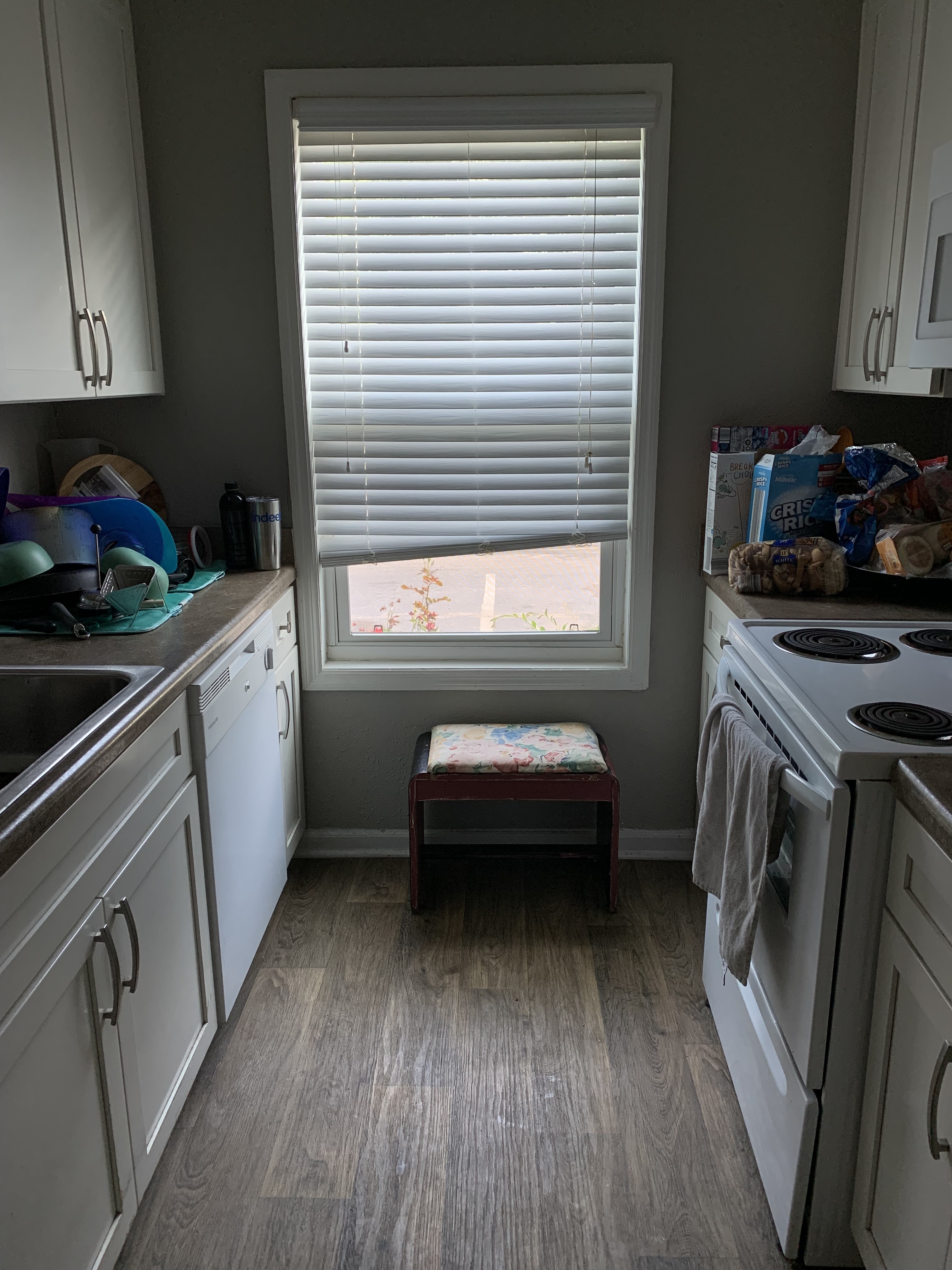
One thing that's always confounded me about those apartments and the one here in Durham too, is that the kitchens are so small. I think the people who design apartments think that two parents and 1.7 children will live there. Ironically, low income families across the world tend to have more children, relatives, and friends living with them, which requires multiple people to be preparing meals almost constantly. While galley kitchens are not my ideal, there is something to be said for being able to reach everything without moving, and being able to order everyone out of the kitchen when I'm cooking because there isn't enough room. No one would believe Drew Barrymore if she said she needed more space in her kitchen. 

In China, we lived in homes with mudbrick walls and no plumbing, neighborhoods swamped with open sewage, bars on the windows, and unstable electricity grids that caused lightbulbs to explode like little glass grenades. The confusing thing was that our homes were luxurious compared to many of our local neighbors, and hovels compared to some other missionaries. It was often embarrassing that we had so much or so little, depending on who our guests were. I find myself in much the same situation as an adult on a different continent. My parents were conscientious of their living choices in mixed cultural contexts, and did a wonderful job with that juggle. Still, they chose to live far below their means. I'm not convinced that my similar situation is as autonomous.   

I'm right on time for my appointment with mysticism as a Millennial exvangelical white woman, but lack of answers, resolution, and control is not tranquil. I'm probably the only moron who thought it would be. Living in the unideal present has given me a more realistic and depressing understanding of the castes of existence in the United States and all the rules that actively keep people from transcending the misery of poverty. I'm against the idea of "bad" neighborhoods, but the darkness and tension that permeates poor neighborhoods often feels bad. 

Exhibit A: Apt 315. I don't know how many people were living in 315, but one consistent character in that household was an older teenage boy. I had nothing against him, except that one of his buddies was trouble. The buddies came by in their car every now and then, and then they all stood down by the edge of the forest (which is mere paces from our building), and fired their gun into the trees. 

I was making dinner when I noticed flashing red and blue lights on the ceiling. I reached over to the window and parted the blinds to see three squad cars lined up in the street. An officer was talking to the teenage boy who looked like he was desperately trying to reach someone on the phone. An ambulance was already outside, but must have done its work (if someone went in to the ambulance, I never saw) and left soon afterward. The squad cars stayed and stayed, for hours. 

When I looked out again I saw a white crossover with lettering on the side. It wasn't the typical black and white paint job, it was rather inconspicuous. The letters said Crime Scene Investigation. Of course I recognize that someone somewhere must have the job of taking careful photos at crime scenes and samples and stuff, but it's one of those jobs that I've only seen on TV and therefore only existed in my mind as part of the world of TV. A man with rubber gloves on was rummaging around in the trunk of the car putting together an accordion folder of I'm-not-sure-what. It looked like drop clothes, but I couldn't wrangle a picture of their use into my image of the interior of Apt 315. Then he slung a nice camera around his neck and began taking pictures in a 360 degree radius of the surroundings of the building entrance. I wondered if my prying little eyes were captured between the blinds the way a cat's eyes look robotic in a flash of light. 

Then the CSI photographer walked into the building entrance and that's all the more I saw. Well, I did see that the teenager didn't seem to be in trouble. He was going in and out of the apartment, eventually with two overnight bags packed, and then he drove away. I didn't see the family's car for a few days, but when they were back, they had a U-Haul and were moving out. What happened in there? 

As I'd been watching through the blinds and putting together that something probably terrible had happened, I thought about going out there and asking if anyone needed food or something else we could offer during a crisis. In a previous chapter of my life, that was my job - stepping in to neighborhood crises with food or jackets or kind words or childcare at the ready. This time I just stood still. 

I thought to myself that if I went out there to satisfy my curiosity and offer assistance, perhaps I would discover what had happened and perhaps that would help me piece together the other clues I'd gathered about this family. Then I would be crushed by the weight of all that I could not do to help. All the help they'd needed leading up to this point that I could not give because I did not know them, and I didn't want to know them very much because then I might have something to offer, which means I couldn't not try and help, which means I would be sharing in their suffering on top of all the troubles I'm already facing. 


The smoking bench has been backed into by cars so many times that it belongs in an impressionist painting. 

Exhibit B: Apt 312. Inside my imagination live the lives of other people, painted in the color scheme that belongs to me. For a year, I knew the neighbors in Apt 312  only by sound (I never saw them), and the room in which they produce this sound lives in my imagination. The sounds I hear come from who I think is a child. The child is not like most other children of similar voice maturity because they do not speak but only shriek. They sound like a whale, their voice dipping up and down in a curvaceous and continuous line, or like a grade-school recorder flute as it distorts. Are they happy? Are they communicating an idea to someone else in the room? In the room as I imagine it, there is no furniture except a small table, and on the small table there is a television that keeps the child happy, or at least entertained, most of the time. Maybe they whoop when they see something on the screen that they like. The rest of the room, which is small but clean, is carpeted and there are high-pile blankets making hillocks of fuzzy rainbow flowers in every direction. I know this image is also transmuted from Tajik homes in China. The child's family is doting and inhumanly patient. They treat their child like the incarnation of a Hindu god. What saints they are, for I would only want to stop the blubbering of a whale. 

My perception of my neighbors is unsaintly. But part of writing, both fiction and nonfiction, is getting to tell stories about unlikable and imperfect characters, in this case me. I wrote the paragraph above last year, and have since learned that my shrieking neighbor is an adolescent boy with autism. In my limited interactions with him and his mom, they are both considerably more patient and loving people than I am. Just this week I heard them singing happy birthday, followed by a lot of excited shrieking. 

Exhibit C: Apt 306. The one family I had started to get to know had three or four kids of their own, and cared for several additional children. We met them last summer at the pool where one of Ishmael and Ira's agemates in their family hugged them in the pool, and the dad would catapult my kids out of the water along with his own kids, just like my dad did in the pool when I was little. We'd wave and chat briefly whenever we passed each other in the neighborhood. Their kids often played outside in the grass between our buildings, and I began inviting them to play games, draw with chalk, and eat graham crackers on our patio. The kids waved at me when I'd drive by. 

One day I waved at them and the little girl I talked with the most gave me a much less enthusiastic response than usual. She looked worried, I realized later. The next day as I walked home from the mailboxes, I noticed an orange piece of paper in one of the windows of this family's apartment. I got closer and saw that it was an eviction notice. All their belongings had been locked inside and if they came back to get them without talking to the management or the sheriff, it would be considered breaking and entering. I never saw them again. 

I still feel miserably sad about that family. Where did they go? There is nowhere in this city with cheaper rent that I know of. The kids didn't get to say goodbyes and probably didn't get to take any of their things when they had to leave. I imagined their pillows still in their bunkbeds and how they'd probably be destroyed when maintence went in to clear out the apartment. Somewhere out there, my little neighbor was missing that familiar pillow. It hurts me to think of how joyful that family was in spite of the struggles they were up against. The dad had a job, but they must have been unable to pay the rent for a long time to have gotten to the eviction point. Even if we'd known their situation better, we could not have helped out with that level of cash. 

Once I'd discovered the orange notice, I spent hours putting together a packet of documents about their tenant rights and other city resources for struggling renters, although the websites offering special COVID assistance had long since used up their emergency funding. I carried around that packet of documents hoping I'd see the family somewhere and could give it to them, but it was already too late. I wonder if the kids got to say goodbye at their school. 

Part of my deep distress over that eviction and the left behind pillow was that it feels familiar to my own childhood. We left so many homes to which there is no return, and with that came the same feeling I'd seen in the little girl when she was too worried to wave back at me. The loss of your connections, your friends, and the impermanence of stuff. Adrift in a scary sea of an adult problems that work actively to make life harder. Too young to have any power within that sea. Then we grow up and realize that if we're poor, we're still mostly powerless.  

I have one picture of those kids that I'd taken when they were playing on our porch. I printed it so that I can say goodbye to them as many times as I need to. 


Exhibit D: Apt 318. When we first moved in, the neighbors in 318 were dealing drugs and jumping over live fireworks. They eventually abandoned their apartment and all the stuff in it. But they were the friendliest and most generous people to live in their building since we've moved here. The current neighbors in 318 arrived around a time which makes me thing they're Afghan refugees, but some other aspects make me wonder if they're Pakistani by way of Afghanistan. They aren't friendly, but I think it's because they're scared, and I don't blame them. I worry about them when I hear the old woman's deep cough or when bombs burst in air during the 4th of July. 

The young woman of the family sits near the mailboxes for hours in a jacket in Southern summer heat, talking to friends or relatives in other countries through the earbuds attached to her phone. Most of their belongings are probably donations from churches or relief funds. Someone gave them a 1970s rainbow sheet set that is coveted by vintage sellers, and I always think about that when I see it drying on their fence. Recently a young boy in the neighborhood was throwing large rocks and otherwise trashing the patio of the refugee family. So Jonas and I sit on our patio and wait for the kids to come by and then chase them away. It makes me delight in being an adult that my stare is enough to put fear into beastly children.

Exhibit E: Apt 319. These neighbors are chaotic. Once I had the distinct and amusing pleasure of overhearing someone in that household come out on to their balcony while on the phone, trying to convince a girl to continue their relationship. The caller made an impassioned case for why this girl should come back to him instead of be with some other guy, and the reasoning was mostly a list of the sexual pleasures he'd provided in the past, and how he could perform these things better than the other guy. She hung up on him. 

Someone else who lives in that apartment must be a student in beauty school, because sometimes there's a disembodied mannequin head floating on their porch, or a drying wig flung over the rail.

Plastic play food ends up in the grass below their porch, but they never come pick it up. The kids are young and cute, but often the recipients of a great deal of shouting, along with the weepy eyed little dog. When the kids cry, I want to go far away so I can forget the hurt playing out in someone else's doorway. As a child in China, I remember hearing a woman being beaten through an open window and when I told an adult (not my parents) what I was hearing, they said there was nothing we could do and it wasn't our business. I never know how involved I should get when I overhear yelling or hitting. I think of times when my own sons have screamed or sobbed, not because they were hit or yelled at, and thankfully no one took it as a sign to call the cops on us. 

Exhibit F: Everything, Everywhere, Forever. As far as I know, Drew Barrymore is actually a lovely person. She probably smokes pot, even though her house probably doesn't smell like it. I don't like the smell of cigarettes because I smelled SO MUCH of it growing up in China, and I don't like the smell of weed probably because I never smelled it growing up. I still don't like the smell, but I appreciate it a lot more than I did before I moved here. It's a smell that's becoming part of my sense of home and community. 

I've learned that the history of weed in Black culture is often a salve for sorrows. It feels as if the long history of criminalization was really just a way for the powerful to say, "we want you to stay poor, and hate it." No opiates for the masses allowed. When I see my neighbors in a cloud of smoke, I respect that moment. I want them, and me, to have those moments where troubles fade into the background for a minute and we remember the treasured things in our lives in spite of all the circumstances that could and sometimes do lead us to hate being poor.

Almost all our neighbors have bleak backstories, at least from my vantage point. Maybe I do too when the neighbors are observing us through the blinds. I wonder if they wonder why I'm always carrying small plastic groceries bags of clothes in and out of our apartment. The pains of these families are evident through the walls and closed doors, but each of us is too beaten down to take on more pain that isn't our own. The gap between the way things should be and the way things are is ever present. It requires a herculean effort to believe that anyone cares, because that's not the evidence before us. 

The apartment management can be low-key despotic with their arcane rules coupled with wild incompetence and ridiculous fees. The pool is this entire microcosm of American disgraces, in which the powerful control the overtaxed. It's like the management waits for dark-skinned children to punish for breaking arbitrary rules while praising light skinned children in the same breath. I clench and unclench my fists. My nails have grown long and strong, fortified by the sunshine and hair dye, painted to match the water. I silently pretend I'm the guardian of children who obviously aren't mine so that they can stay in the pool. I worry silence isn't enough. The management seems despondent at being on the premises, and superior when they leave in the afternoon to homes in other neighborhoods. 

Not everything is depressing, sad, tense, or exploitative. In what some people call bad neighborhoods, there is also joy and resilience. Families barbeque outside together. Tweenagers do TikTok dances in the pool, admiring their own fresh bodies. Men zip around helmutless on their scooters, sometimes giving kids a ride. Our kids trade Pokemon cards with other kids. The cicadas look prehistoric and their cries to mate haven't lost their magic. 

The summers here are everything summer should be. When Ira fell asleep next to me, his breath went in and out with a noise that sounded like a shriek followed by a sigh, "freeee-domm, freee-domm, freee-domm." Our tans deepened to the point where our body hair gleamed in contrast like a metallic weft. Cockroaches lay lifeless and papery on the patio, resembling an overturned container of medjool dates. 

Nearby, snakes entangle themselves in a thicket of Bojangles wrappers and exotic vines. It is the kingdom of frog fairies and the occasional cat, sleek as a sheik. I stand a safe distance away on the steaming asphalt, like molten lava recently congealed. Above our heads, a building has misplaced a vent covering, leaving a hole in the bricks that looks like a giant flared nostril. My memories of summer in the cool concrete shadows of Khrushchobas are similarly some of the most vivid and cherished that I have. 

A line from Elif Shafak's "Three Daughters of Eve" struck me. It reads, "Peri would come to understand that nothing swells the ego quite like a cause motivated by the delusion of pure selflessness." I've tried to describe our living situation as something I'm grateful for, something I recognize as subpar for everyone involved, and as an opportunity to learn from and immerse myself in without a savior complex. It's messy. 

Choosing to give generously (money, time, emotion) can be challenging. Choosing to suffer systemic greed is delusional. A big moral dilemma since living here has been balancing choosing to help as I'm able with not liking it. What does it mean about me that I care and I help (sometimes), but with a grimace? I have lost the delusion of selflessness. Which is a great thing. Charity costs less than solidarity. And while chosen solidarity is valuable, unchosen solidarity lasts longer and isn't half as suspicious in "bad" neighborhoods as charity is. There is no glory in unchosen or imposed destitution. When we move away some day, I won't miss this apartment or this neighborhood. But I will remember that we learned to call it home. 

_____________________________________________________

Parts of this essay appear in a different format in this anthology. 

Tuesday, September 27, 2022

Will I Be Perfect[ly Happy] in Death?

CW: Suicide

On the Live From Snack Time Instagram page, an anonymous four year old was quoted as saying, “I finally did everything right today!” I saved the post because it made me chuckle and it resonated, as so many blurbs from that account do. But when I revisited it a few days later, I felt this enormous pang of sadness for my younger self. I've always, always been chasing some version of perfection. I've been blessed with several revelations throughout my life that I don't need to be perfect, nor is it required of me, but still. Still! The idea appeals, does it not?

Part of my perfection fantasy has always been future-oriented. If only I could get to such-and-such a place. If only I could land such-and-such a job. If only my living situation was more permanent. Then, surely, I would blossom into a person who has everything clean all the time, never gets angry or frustrated or melts down, loves every aspect of my family members, and the cat wouldn't destroy the home I decorate impeccably. By the way, I remain extremely humble and relatable throughout becoming flawless. 

It's funny to put such a fine point on it. Even when I do get some things I want or have a day where I didn't do or say anything regrettable, I quickly move on to new goals. The inverse is just as true. Just as I fantasize about being a perfect version of myself, I also imagine end dates to my pain. The amount of decay and death and horror that has touched me in my life is heavy indeed. I'm moving past comparing my pain to other people's pain, because I've found this does not help me or others. Being able to say that some things in my life or my past are not right and are really too much allows me to process their full weight. That often comes with depression. 

Yesterday, for the first time in my life, I noticed myself believing that at some future time I will no longer experience depression, ever. That I expect my life will change and perfect itself in such a way that it never ties me in knots again. Or that I’ll just be fine and happy with knots. But I don’t think that’s true. 

While I have no plan to depart earth early, it appeals to me more lately. I'm also the most aware I’ve ever been that 1) my depression will pass, and 2) my brain gets sick. I wish it didn’t, just like I hate to get regular sick. But I can’t always control what makes me ill. I can control my healing environment, to a degree. 

I also know that suicide is a chosen escape from a sometimes incurable disease that is very painful. It’s not just a matter of mind over matter to avoid suicide. Sometimes suicide is stronger than the patient and it chooses for you. Like any other illness. 

I want to stay here. I do not lack for love or loved ones, or joys or passion or hope. Still, I get sick. 

I often don't realize I'm depressed for quite a while after I've been experiencing depression. I read this beautiful, heartrending post by Justin Tang about the suicide of his beloved partner, Jing Mai. The tenderness with which he saw her beauty and her illness coexisting, and his respect for her in the midst of his mourning touched me. It gave me a category for what it looks like to love someone who is severely ill and knows it without trying to medicate them to death (not that people are trying to over-medicate me or that medication is wrong). Jing Mai didn't lack for support or love, joy or passion. She just died from invisible wounds. 

I know that if I read that story and related to Jing Mai, others must too. I'm not the only mostly-stable person who sometimes has suicidal ideations (of which planning to kill oneself is not the only symptom). I love Jesus and my faith gives me hope for life and death (a relatively recent development, despite a lifetime of religion). But it's not magic that immunizes against suicide. Or cancer. Or whatever other illness. And you can love Jesus, be ill, and still hate being ill. It was a heavy refrain in my formative years that Jesus makes pain bearable. In fact, my understanding was that experiencing pain was a result of a lack of faith. Because perfect Christians joyfully accept everything God sends their way, and therefore can endure it. But I never could. 

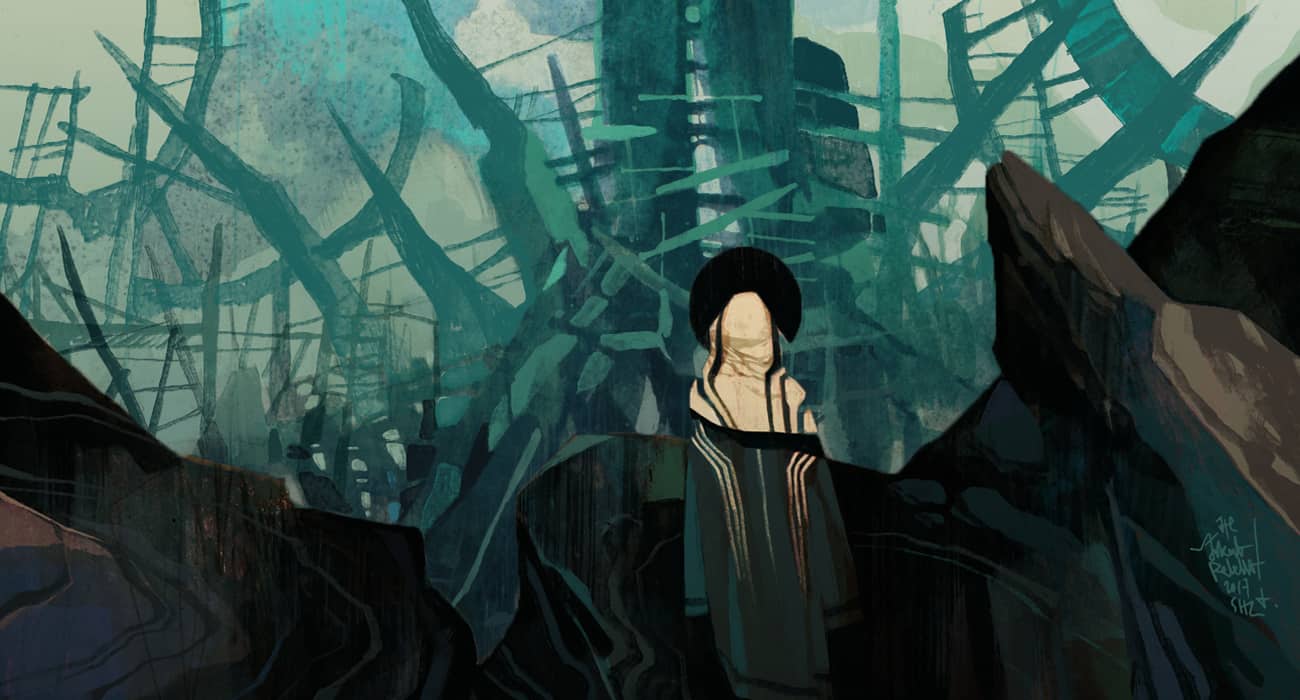
artwork from Judas comics by Jakub Rebelka

For a variety of reasons, I've been studying and thinking about Judas in the past several months. I don't think he killed himself because he was so ashamed of his betrayal, or because he was damned. 
I think he lost his friend and he was irreversibly saddened. His brain was too ill to provide the time to recover slowly. I believe that Jesus loves Judas.  

The Orthodox Christian traditions have a different view of hell than modern Protestants. Fr. Peter Heers explains it by saying that to be in the presence of God but not want God - that is hell. God is in Hades because God is everywhere, but if you are also in hell (including while you are living and breathing on this present planet), it is because you do not want communion with God. Similarly, Saint Sophrany of Essex said, "You may be certain that as long as someone is in hell, Christ will remain there with him." If Judas wants communion with Christ, he will have it. (You might not agree, but I believe that).

In some ways, the evolution of my faith and musings on metaphysics have led me to see life and death, heaven and hell, as both present all the time. Sometimes that makes death seem a lot less scary or permanent or "bad." Sometimes the pull of death is just a hope that there's something easier later. 

Tuesday, January 11, 2022

Female Energy in the Garden of Edena

The iconic graphic novelist Jean Giraud wrote a series called The World of Edena over the span of about 18 years. In his notes about his process, he wrote: 

I purposefully left several points obscure in my story... These obscure areas are like reservoirs of imagination that my unconscious mind creates now for me to explore later. When I try to find my own interpretations, I feel like a witch doctor reading the future in the entrails of an animal.... There are some things I drew in this story whose importance I will discover in the months and years to come...The project will change according to my own evolution. I established some plot developments that exceed my current skills, and that's very interesting to me because, if I want to get to the bottom of this story, I will have to go over my own head. I will have to work and grow up.

I love this idea as an artist, but also as a person committed to growth in a trajectory not completely controlled by myself. I've wanted to write for most of my life, but only settled into the idea a few years ago that what I have to say isn't ready yet because the parts of me that need to come together in order to say it are still forming. I still get impatient, but I'm excited for the writer in me that is learning to speak.

Even more recently, it's begun to dawn on me that the realm of the physical is something I've been experiencing since I became conscious, and yet I feel myself just waking up to it. I am late to considering my own body. She has taken good care of me, and I've been lucky enough to take that for granted. So much so that I rarely associate my self with my body. I think of myself as composed of a body, a mind, and a spirit. I identify my sense of self mostly with my mind. 

As I've started to pay closer attention to my body, not only do I have new questions, but I've found that body, mind, and spirit are more connected than I knew. My body is both familiar and puzzling. I've come at this study-of-self through the practice of rest and the rhythm of my period. 

Sometimes I can't tell if my body is changing or if it's my awareness that's changed. Leading up to a recent period, I felt strange for about a week. At first it was a boiling at my core that persisted with a manic ferocity. The timing of my period is consistent, but the feelings - physical and emotional and perhaps even spiritual - that orbit my period are diverse from month to month in their presentation and intensity. That can make it difficult to decipher whether it's "just PMS" or something else. But as I want to explore, a flippant explanation of "just PMS" is itself a symptom of cultural fear and ignorance, and our tendency to splinter the body, mind, and spirit. 

The days surrounding my period often give me a dual-minded experience. It's not a true out of body experience, but I often get the sense that my self is bigger than me during my period. This might just be an increased awareness of the interplay of the aspects of self, since it is easier for me to see one thread through my body, mind, and spirit during my period. I'm still me, but it also feels like I'm looking at me. I see myself as both fragile and powerful, and potentially dangerous. I carry around my own psyche as if it were a deadly weapon, protecting it from the outside, and protecting the outside from it. 

But even the language of weapons betrays how ingrained the idea of danger or volatility is in the way we view some functions of the female body. Some people reclaim this idea of danger into power, but reclamation or realization needs to be more than mere reaction. There is still an attitude (I know because I often share it) that the intensity I experience or exhibit surrounding my period is a uniquely female malfunction and results in emotion or action that needs to be apologized for. I have an urge to protect and contain myself during my period, but ultimately I want to learn to be in harmony with that energy that I can't yet define, instead of hiding it. 

The humming intensity of my period hormones (that I experience mostly as unpleasant) wears me like a cloak for several days. It's not simply a heightened reaction to ideas or circumstances. It's a thing that comes from me but also hunches over me. I can see its shape, but I can't make it obey me. I tremble at its voltage, but also it is thrilling. Because it's not a demon, but it is energy that is bigger than I know how to harness. It gives me a sense of self that isn't fully in my control. 

Something that interests me about this feeling is that I occasionally sense other women, usually older women, who radiate this energy in a stable form. They've harmonized with it. Rather than a cloak engulfing them, they wear this aura in beautiful, sweeping capes. It doesn't surprise me that women with this aura are feared or praised as spiritual. To be in harmony with your full self and what is beyond yourself - to be at peace in chaos - requires mastery. Or to experience lack of harmony and not be destroyed, but adapt - that also requires mastery. It's a state of neither mind over matter nor matter over mind, but a balance of the two of which the self is an expression, not the orchestrator. It's not a subjugation of energy but a harmony with it.

by Jean "Moebius" Giraud

What's daunting about trying to grow in this ability to harmonize is that the flow of energy fluctuates. When my period ends and the ferocity hibernates, in its place is a yawning valley of tension. Not a high strung tension, but a humming tension.  If I sit very still, I can feel my core humming, like a gear shaft. This hum consistently leads me to write because that is one of the tools I have for resolving tension. 

Some cultures sequester women during their periods, and I never can decide whether I'd like that. Sometimes I'd like to be alone, but not banished. I like to be cared for, though I'm not ill or somehow diminished. I think the cultural current that leans toward hiding or shaming unbridled female hormones are particularly strong surrounding menopause. I'm not immune to the feeling of fear and something more negative toward menopause and women experiencing it. I get the sense that women experiencing menopause feel the same way. But it's not the body breaking, it's the body working. So there must be a way to honor that, and even celebrate it. 

Isn't it interesting how much we associate the energy that some women have with other-worldly beings? Witches, goddesses, oracles, angels, and even aliens. Our collective imagination associates women we can't control or women who harness powers we don't understand into these categories. It's also common that humans fear what we don't understand. Jonas and I were arguing about the intent of UFOs drawn to nuclear power (apparently this is a phenomenon). He thinks it's inherently ominous, but I don't. Since I'm not invested in the intentions of UFOs one way or another, it's easy for me not to immediately assume that the inexplicable is dangerous. 

We have a lot more data about women. Think about "the humors" in antique medicine and smelling salts, and the ways in which women were treated as ill for having big or inexplicable feelings. Or when a woman was in knowing harmony with her energy and used it in social or medicinal ways, it was revered or reviled. The concept of witchiness, both by those that praise it and those that shun it, encompasses the idea of control or cooperation with things that are not reasonable or that we otherwise find mysterious. Before modern medicine in Europe and the colonized United States, midwives and herbalists were often considered witches for their ability to address bodies in ways that we did not understand. Most of us continue to fear the unknown in its modern iterations, medically and beyond.

But even further back, and in some more enlightened cultures than those of my ancestors, women with knowledge of bodies and in harmony with female energy weren't treated as ill at all. I suspect this is because the special powers that hormones can provide were seen as both healthy and even as a gift. I sense that I have this potential, but I don't understand how to guide it. I know that it can be destructive, but I will use it destroy evil. I've never heard of menopause discussed in previous eras, and it may have been beyond the life expectancy of many women in many eras, but I suspect that there used to be a much healthier culture surrounding it.

Recently I read the published journal of a young Ludwig Bemelmans, best known for his children's books about Madeline. I like the way he recognizes sensations he feels when he experiences his surroundings. He says that elation begins like fear, and "in this excitement, many doors open to walk out of the house of reason." 

With my ingrained emphasis on my mind as the primary self, reason has always been a god I seek to please (if only I could find her!). Anything that derailed me from reason was my enemy. I was going to Figure Things Out, and then rest. Rather, figuring things out was sure to bring me rest! Times when my body intervened, either unable to keep up or with hormones, felt like betrayal. Those were times I'd try to push and pull my body up and make her take me where I wanted to go. Anything that beckoned or shoved me off the path toward reason was something I feared and turned from. 

Reason isn't bad, but it is finite. It can only lead you down a straight hallway to a door. It is something else entirely to open the door and step out. Women possess the impetus to take that step (and men too, but I can't speak on it). To wear that cloak of harmony, with the self and with the universe, you have to let go of controlling reason. And for a woman like me, you have to walk down a lot of frustrating halls to get ready to wear that mantle. 

Ludwig Bemelmans noted that the doorways out of reason were accessible through elation, but that that feeling could come from fear, too. Three times at least, in Psalms and Proverbs, we're told that "fear of God is the beginning of all wisdom." But this fear of God isn't assumption of punishment, but a reverence for beyond-reason. Poetically, Wisdom in the scriptures is always embodied as a woman. She who steps through the doorway and harmonizes. 

If you live with attention to each of the three selves - body, mind, and spirit - there's a lot in life that is an invitation to the unknown or the reasonless. I spent a lot of time fearing or ignoring that invitation. I also think I'm more open to it from a place of rest, and if that is a prerequisite, that might explain why so few people say "yes" to that invitation in the end. 

by Jean "Moebius" Giraud

My fullest self, "the best me," is growing into someone different than the me I wanted to be for a long time. A self at rest is not our natural predilection. But leaving space for your future self to fill in the gaps is the work of growing up, as Jean Giraud said:

I purposefully left several points obscure in my story... These obscure areas are like reservoirs of imagination that my unconscious mind creates now for me to explore later. When I try to find my own interpretations, I feel like a witch doctor reading the future in the entrails of an animal.... There are some things I drew in this story whose importance I will discover in the months and years to come...The project will change according to my own evolution. I established some plot developments that exceed my current skills, and that's very interesting to me because, if I want to get to the bottom of this story, I will have to go over my own head. I will have to work and grow up.

Wednesday, December 8, 2021

A Breath Caught in the Quiet Dark

I need to tell you something. I spend an ungodly amount of time, usually in the shower, thinking about how to define myself in my Instagram bio. I am the only person who ever reads it, but it's an exercise in Knowing What I Stand For versus Protecting My Sacred Vocation of Growth. In the end, I almost never write anything, in case I'd then be called upon to give an account of what I mean by such a string of terms and labels, and didn't I know that they're not in the Bible?

It's been too long since I truly embarrassed myself on the internet. Most of my biggest fears are some form of, "someone I care about will condemn me for my faith." Alternatively, I fear that if insist that the Holy Spirit is upon me and that the rest of you medieval fools can't see that, I'm probably just an ignorant heathen woman. Because if the former is actually true, a lot of people might be upset and I'll lose my friends and potential readers. 

Something that made me cry lately actually had to do with medieval fools. First, I found myself praying myself to sleep (I've embraced this as soothing rather than irreverent), asking an unusual thing (welcome, Spirit): that I be shown a way to pray that didn't feel like me. That is to say, an overwrought editor of my own ideas, talking to myself. It is intolerable, trying to anticipate every which way in which the God-Head might misinterpret my wishes and then backtracking through my words to make it more clear. I am sure God finds it amusing at best, boring at worst. The way I pray is the way I talk on Marco Polo, but with less folding of my lips over my large teeth in the cracked reflection of the screen. Meaning, I start to say one thing, hear myself being utterly unintelligible, and try to reverse my language by starting several offshoots of clarifying thought that aren't clarifying at all, but entirely new stories. In the end, I have lost my point, and so has everyone else. All the while, time marches onward in its chilling linear way. I'm probably doing it right now. 

What I had started to say was that I prayed uncharacteristically that God would fix my prayers. Or rather, not fix them, but give me some vision of a different path. And this She did, sooner and differently than expected, which is how all of us can know it was Her. 

Headline: "The Trappist Monks of Mepkin Abbey Taught Me How to Pray Again." Subline: "So Why Didn't I Want to Introduce My Methodist Congregants to Them?" This article by Jason Byassee appeared on The Christian Century (a minor miracle that I would click on such a thing), and whether I cried because the person who recommended it said they cried is ultimately undetermined. But crying is how I know I'm feeling, and I have an out-of-mind experience whenever I cry when I'm not sure why I'm crying. Uncategorized Crying triggers a Tinkerbell-sized me to float up to the upper back portion of my skull, like a helium balloon in the corner of the rec-room ceiling. Then she takes out her notepad and says, "oh, interesting." She observes something she doesn't understand, but has been trained to suspect that the crying is not Nothing, but an invitation to some doorway that's jammed in its socket due to excessive heat. I know all about that now that I live in the South. 

I haven't worked out quite what the crying was for, except that I do have a subcategory beneath Uncategorized Crying that is something like Experiencing Tenderness Connected to Christian History. There are only like three notes in that file, so I'm not trying to be hasty about labeling it a "thing" just yet. Anyway, let's move along. The whole article about the prayer of Trappist monks is worth reading, but two things stood out to me: First, Byassee said, "I sometimes now speak of Reformed Christianity as an experiment in being Christian without anyone anywhere vowing poverty, chastity, and obedience. The early returns, 500 years on, are not positive."

I would like to go to un-reform school, please. For I hate this newfangled Body. More like mangled body. Actually, wait. Does "newfangled" mean something has grown new fangs? Because in that case, newfangled and mangled are both appropriate. At the very same time, if given the option between the establishment and burning down the establishment in ye old 1517, I'd have kindly supplied a spark from my witch's pyre. 

Did you know that when God appointed Malachi a prophet, there had not been a prophet in Israel for 400 years? The poor man. But I'm just saying, it's time again for Malachi, time again for Martin Luther, but, you know, different.... 

One of my other favorite portions of the article about Trappist monks and Methodists is this quote from Thomas Merton, "He prays that there will always be dark, quiet churches, so that even if folks don’t know how to pray, they can step inside a minute and breathe easily." 

That was the swift, gentle, startling answer to my prayer on prayer. A place to step inside a minute and breath easily. Not just a place, but a way of being, I suppose. 

Oh mangled Body, why do you hit me endlessly? Why, why, do I go from doorway to doorway, and never in your shelter can I catch my breath? Why do you push away my brother? You do not recognize the face of Jesus. When you see it at last, you will Cry Uncategorically. When you see his face, you want to touch it. But the mangled Body cries, "no! Can't you see that he's trans?" 

The Body has reformationed itself to death. And thus needs reformation. As if you or I even know what I'm talking about anymore. But seriously, this makes me ask myself two things. First, who am I writing for? And the second thing is, why? To answer the second first, I am not trying to convince you of anything. To leave or to stay. And this answers the first question: if you're reading this, then I am writing for you. Maybe you also love the reformed, but hate the reformation. Or if we're being honest, love the reformation, but hate the reformed. 

No, of course I don't hate them. But they make me cry in all the wrong ways. And whether you stay or leave, maybe you, too, find yourself crying at what could have been, and what could be. 

One of the unused bios I thought of in the shower is: "undiscovered Jesuit nun," which, in addition to being utterly weird and contrived, holds a myriad of troubles within three words. First of all, nuns aren't scouted like Instagram models. Secondly, Jesuits are a male-only order, one of their very few flaws that I'm aware of. And finally, I suspect I like the idea of being a nun better than I would like the reality. We'll never really know, since the Jesuits won't come scouting.  

It might be worth saying that in the article about Trappist monks and Methodists, the Methodists actually turn out to be alright. At least, they stand on a tradition of alrightness that is not too far reformed as to be un-rescurrectable. Byassee: "I think the reason they took to monastic prayer so profoundly is that Methodism is a revivalist sect. We were born when the Wesleys asked their fellow baptized members of a state church: Are we going to take Jesus seriously or not? If not, fine, but if so, here’s the way to do it: Meet in small groups. Pray. Ask who sinned this week. Make promises to do better. Visit the poor. Evangelize. Encourage prisoners. Teach the illiterate. Since Methodism is a revivalist sect, if we’re not reviving anybody, what are we doing?"

Good questions for all of us prior, current, future Christians-or-not. 

Ok, now I'm pivoting to Christmas, since I haven't given up on being a commercial success as a writer. I gag at every white-people nativity scene I see now, which is like, a lot of gagging. But what I still like is the paintings of fields where shepherds were keeping their sheep, right before a winged host of aliens tore asunder the clouds and all heaven broke loose. And cried, "fear not!" But nobody heard them, or maybe they did but were still sore afraid. 


artwork by Eric 

The fields are all incorrect too, rolling shires instead of tufts of galagat. But I literally do not have time to reform fine art and the American church. What I like about the misplaced shires is the sense of a place to step inside a minute and breath easily. That is the feeling right before I step in sheep shit on my way to see another face of Jesus. 

The mystery of my faith practice - Does She Believe? Are They Looking For a Church? Can Christians Say That? File Under Millennials Leaving the Church, Maybe They Were Never Really Christians - probably gives me an alluring musky scent that attracts people From the Comments Section. I know I reek of it because I've sniffed it on other people and that sort of gossip really lubricates my Reformed veins. 

Reader, do not ask me such things. I am not asking you to stay or leave. I do not have answers, but maybe I will after my next shower? For now I am seeking and finding nothing more than a doorway, or maybe a field, in which to pray and breath easily, like in the good old days of 1516. 


Related Posts with Thumbnails